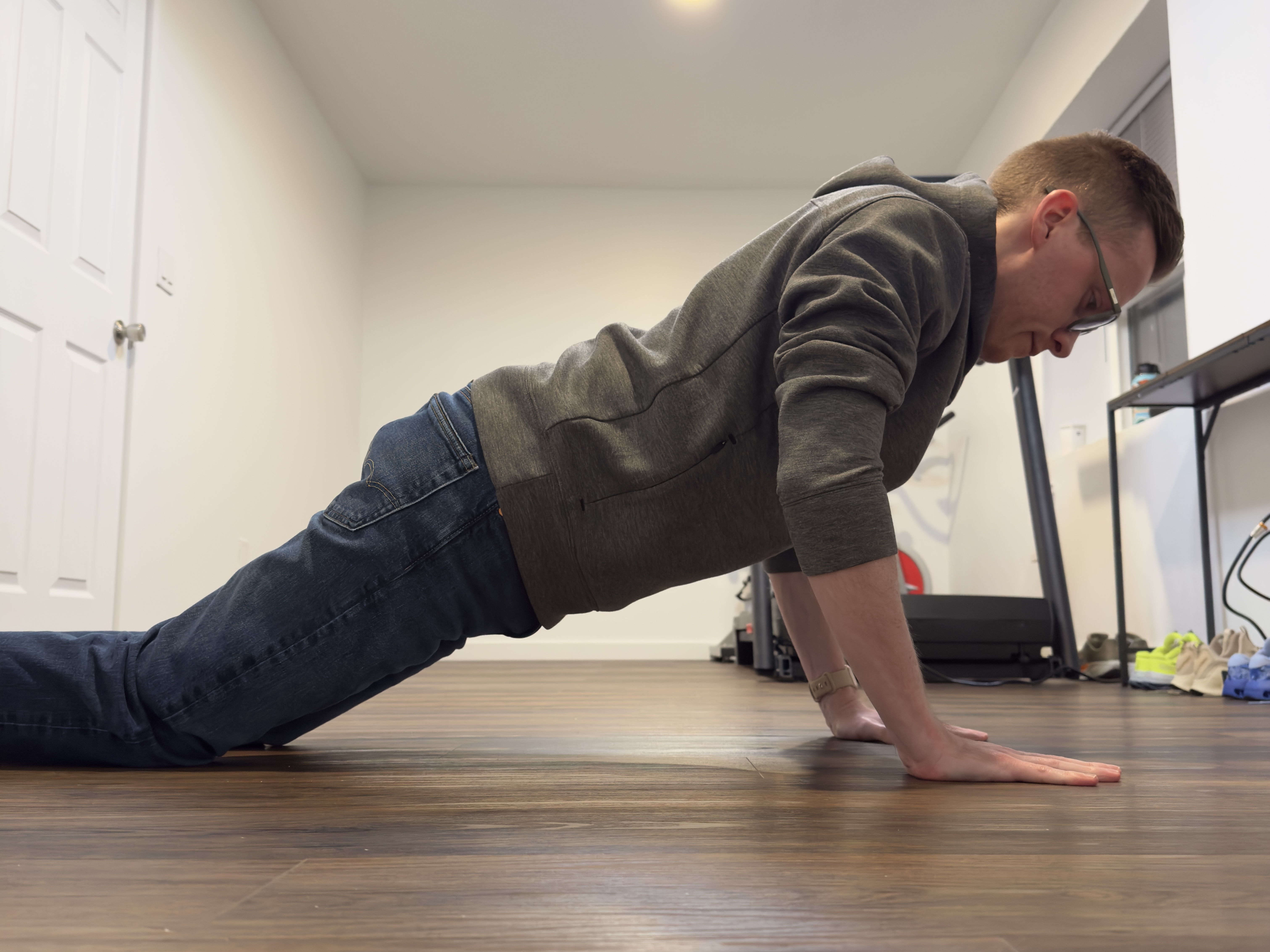
We’re all different and we all start from somewhere. That’s something I needed to remind myself of when I started working out consistently about three years ago (in 2023).
I’ve always enjoyed cardio and still feel most comfortable with it to this day, but things like strength training and yoga scared me because I had no experience. I was worried about lifting too heavy and injuring myself or not being able to stretch enough to do the moves well in yoga.
The moment I let go of these feelings and became open to trying was the moment I fell in love with all aspects of working out.
It isn’t cheating, it’s training smarter
Modifying a workout to your comfort level isn’t going easy on yourself. It’s listening to your body, which is a skill most of us were never taught. It can also help you avoid injury by practicing moves you aren’t familiar with.
Our bodies are all unique too, which means you could have a limited range of motion that stretching alone just can’t fix.
What does comfort level mean?
- Physical comfort: Assessing your strength/mobility and adapting to old injuries
- Cardio comfort: Prioritizing your breathing, keeping a steady pace, and realizing endurance matters
- Mental comfort: Defeating gym anxiety, intimidation, and burnout
- Life comfort: Doing things on your own time, playing attention to energy levels, and relieving stress
How to modify your workouts without feeling like you’re doing less
Strength Training
- Push-ups can be done from your knees rather than in a full plank
- Squats can be done with the help of a chair or with your hands on your thighs for support
- Planks and be done from your knees
- Having a bigger bend in your elbows can make dumbbells more manageable
Cardio
- Running can become power walking
- Focusing on time spent doing cardio rather than distance
- Prioritizing your effort instead of your pace or how many calories you’ve burnt
- Stepping from one HIIT move to another and removing jumps
Intensity
- User lighter weights or a smaller range of motion
- Reduce the amount of reps you do while focusing on your form
- Keep the movement the same, just slow done the speed you do it at
- Cut rest time or add it. Both count towards a productive workout
Yoga
- 45/45 or a 90/90 instead of Pigeon
- Half splits instead of full splits
- Test your balance by lifting your foot slightly during balance moves
- Bent knees during moves like forward fold, downward facing dog, adductor stretch.
How you know you’re modifying workouts correctly
If you can maintain good form, finish the workout feeling challenged but not crushed, and you feel like you can repeat the workout tomorrow then you’re doing it right. The goal isn’t just to survive the workout, it’s to return feeling stronger and more confident than before.
It’s also important to remember that the best workout isn’t necessarily the hardest one out there. It’s the one you can do again and continue to make progress with over time. Finishing a workout feeling capable, not destroyed, is a win.
The mental side of modifying – it matters more than you think
Sometimes the barrier isn’t physical, it’s mental. Maybe the gym feels intimidating, group workouts move too fast, you’re coming back after time off, or you’re just tired of pushing yourself hard.
Modifying gives you permission to show up as you are, not the way you think you should be, and that permission is often what keeps people coming back. It certainly does it for me!
When and how to progress past your comfort level
Apple Fitness + Trainer Emily Fayette often says, “The more you move out of your comfort zone, the bigger your comfort zone gets.” This reminds me to challenge myself in order to grow my comfort zone, but at my own pace.
An example is my base pace for running started at 5 miles per hour, but now it’s 7. It may not seem like a lot, but I feel the difference for sure.
Then with strength training, I started off with light dumbbells being 5 pounds each, my medium 8 pounds each, and my heavies 12 pounds each. Now my lights are 10lbs each, my medium are 15-20 depending on the exercises, and my heavies are 25.
Here are a few things to think about when progressing past your comfort zone:
- Change one thing at a time (reps or weight or time)
- Use a comfort + 10% approach
- Let consistency signal readiness, not ego or desire to be like everyone else
Progress doesn’t have to be dramatic to be effective.
Disclaimer: While I am an avid Apple Fitness + user, I am not endorsed or paid by them to mention their product. I am also not paid to promote any of the products mentioned in this blog post. I’m simply using my experience to help others learn and grow.


 JordyJournoFit